
Petoskey Stones in Leelanau: What to Look For
A stone-covered Lake Michigan beach invites a slower kind of outing. Learn to recognize the Petoskey stone pattern, choose a place where access and collecting are allowed, and enjoy the search without expecting a guaranteed find.
By VisitLP · Information checked October 4, 2026 · Photography from the VisitLP collection
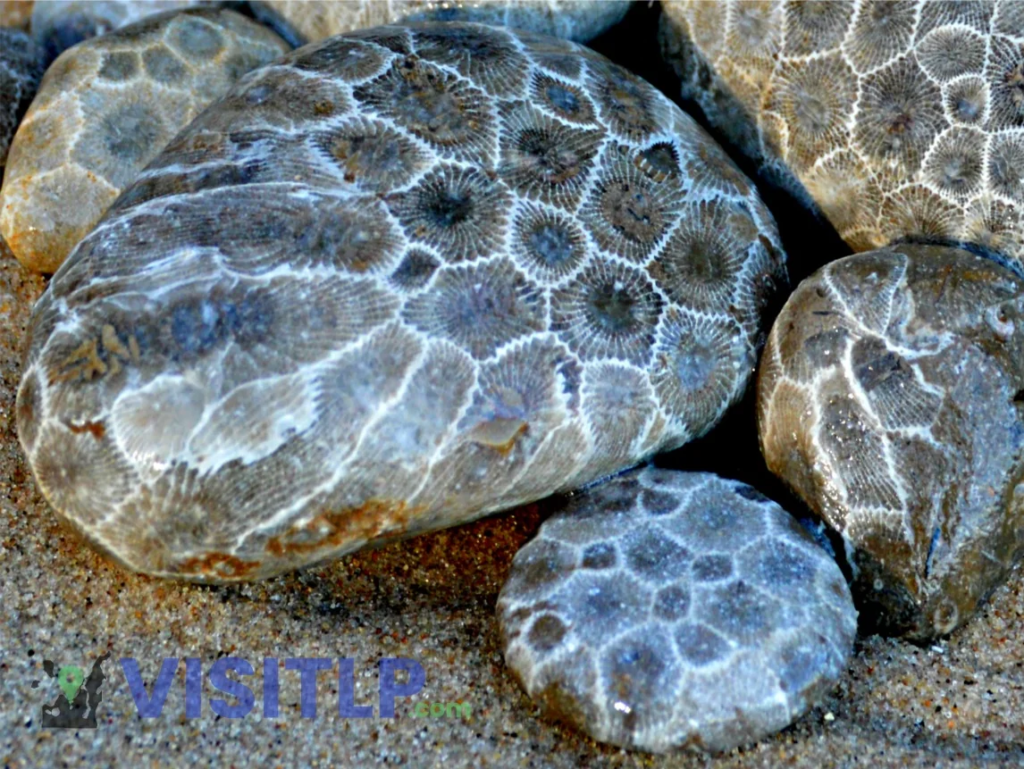
Look for the coral pattern
Petoskey stones are fossilized coral. Their recognizable pattern is made up of closely packed, roughly six-sided shapes with darker centers. Michigan’s geological history and glacial movement help explain why these fossils occur along the region’s shores.
Begin with the pattern rather than color alone. A gray or tan stone may look ordinary until its surface is wet. Compare several examples, turn a stone in good light, and look for repeated structures across the surface. A pretty beach stone is not automatically a Petoskey stone, and an uncertain identification can still be an interesting discovery.
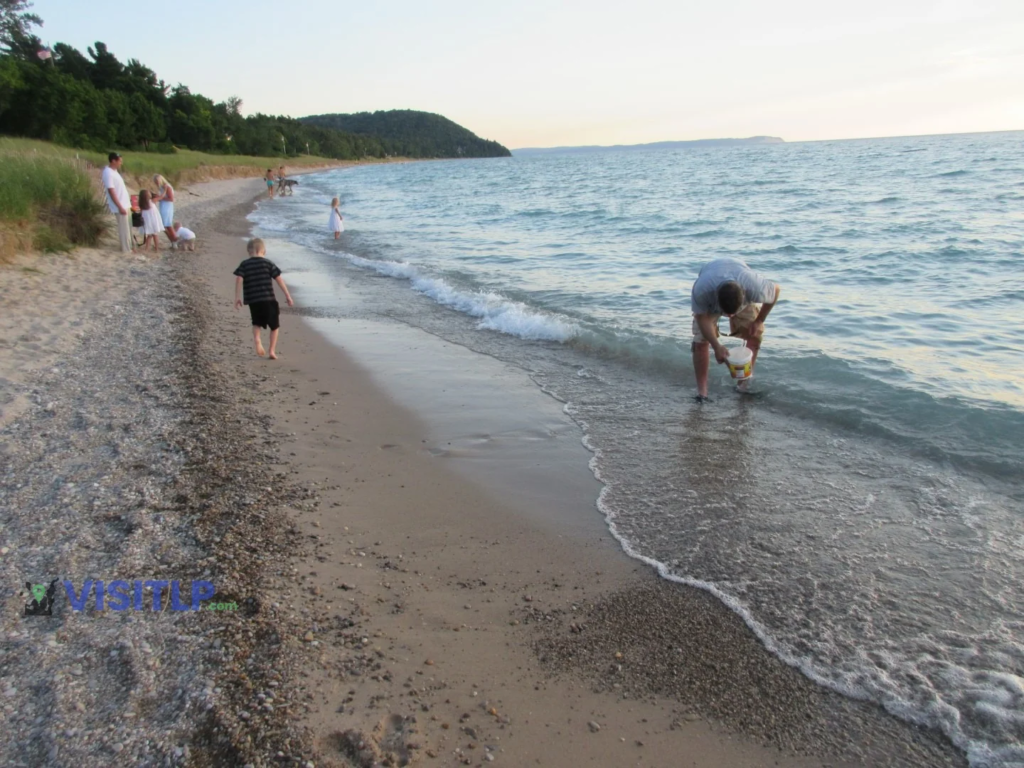
Choose the beach before the search
First confirm that your route to the shore is public and that the land manager permits collecting. Public access and permission to remove stones are separate questions. Read signs at the entrance and check the rules for the specific property.
At Sleeping Bear Dunes National Lakeshore, leave rocks and fossils where you find them. A photograph can be the souvenir. Elsewhere, do not assume that another visitor’s collection proves removal is allowed. If you cannot establish the rule, enjoy a look-and-leave search instead.
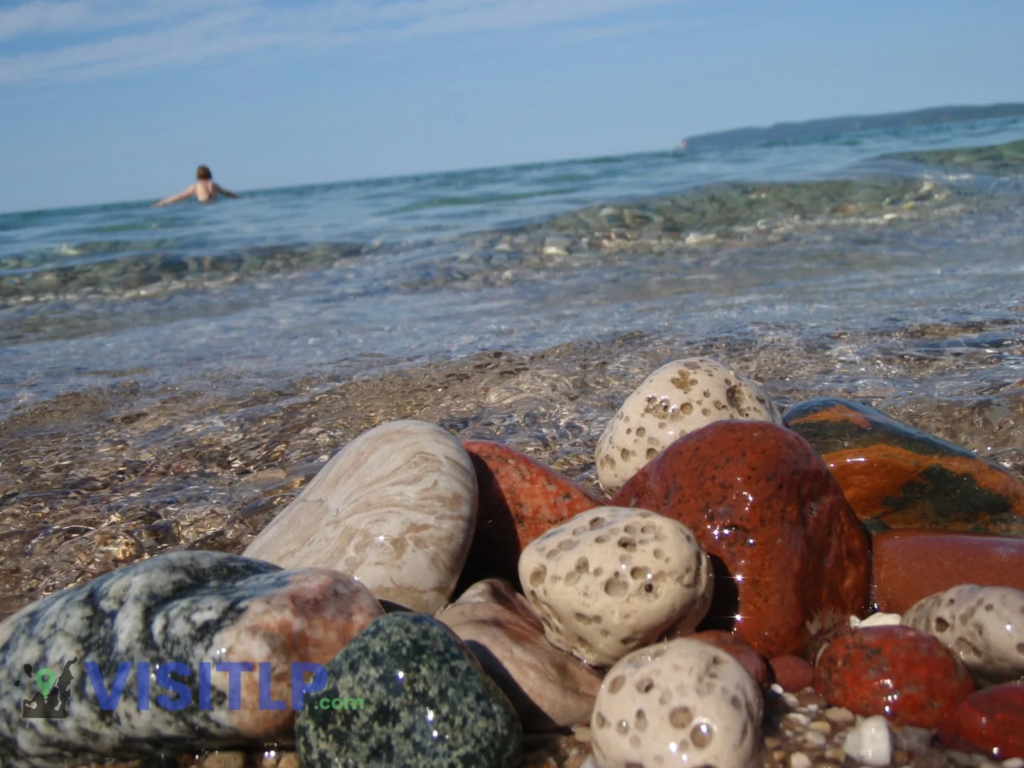
A simple way to search
Start with a small patch of stony beach and scan slowly. Look at the surface, pause at an interesting shape, and compare it with a reference photograph. It is easier to learn the pattern when you stop trying to cover the entire shoreline.
Carry a small bottle of water to reveal a stone’s markings without needing to stand in the waves. Comfortable footwear and a free hand are more useful than a large collecting bag. Keep the outing short enough that everyone still enjoys it, especially with children who may find shells, colors, and ordinary stones just as compelling.
Make the shoreline the experience
A good outing does not depend on finding a particular fossil. Notice how the stones change along the beach, how the water sorts material, and how the same specimen looks dry and wet. Photograph an interesting stone close up and include a second image of the wider shore for context.
Stay well back from breaking waves and choose another activity if wind or water makes the shoreline uncomfortable. Never trade footing or safe access for a promising-looking stone. Keep off unstable edges, respect closed areas, and leave natural features undisturbed.
Pair the walk with Leland
For a day based around Leland, combine a permitted shoreline walk with time in town or Fishtown. Check current beach access locally before setting out. A café, gallery, or waterfront lunch gives the day a satisfying second chapter even when the search produces more photographs than finds.
For a take-home reminder that does not depend on collecting, the Petoskey Stone Michigan design uses the distinctive pattern as artwork. It is a natural fit for people who enjoy the geology and look of Michigan’s shore.
Questions before you go
Does every Leelanau beach have Petoskey stones?
No location guarantees a find. Beach material, water conditions, and what has been exposed all vary.
Can I take one from Sleeping Bear Dunes?
No. Leave rocks and fossils in the national lakeshore and photograph the pattern instead.
Official information for your visit
Hours, access, availability, and conditions can change. Confirm the details for your visit with the relevant operator or land manager.